
I am more a fan of classic 2D fighting games and apart from Mortal Kombat X I haven’t played any fighting game in recent years. That is why I was very interested if Street Fighter 6 would match my taste focusing more on casual gameplay and reviving the spirit of old school fighting games.
Street Fighter 6 has three major game modes to choose from: World Tour, Battle Hub and Fighting Ground.
World Tour is the story driven single player mode. You can create your own fighter and with Luke as your coach you explore a small open world. Every NPC in this world can be fought against by requesting a fight from them. However, there are also gang members which will attack you and force you into a fight. There is a main story of around 15 chapters to follow and throughout you will get introduced to the main fighting characters in the game, some of whom you can select to become your master. The masters are all introduced with some cutscenes and dialogues, and you can learn and improve moves from their skillset. Besides the main chapters there are plenty of side missions to complete and the game has a good variety in the sense that it does not only boil down to beat up some opponents. For example, sometimes you must find a certain item, sometimes you must take a picture with your mobile’s camera. This does not sound too creative but for a fighting game it is indeed a good level of variety. Main missions, side missions and fights on the street give you XP to level up your character and investing in upgrades on a small skill tree. Using moves from a skillset from one of the different masters you met will also increase an individual score for each of these skillsets. Therefore, it is worth changing the special moves of your character from time to time, learning different fighting styles and moves. This is a real strength of the World Tour mode, as it motivates you to find all the different masters and try out new moves continuously. This is further enhanced as the game keeps a score for each master on how much he likes you. This can not only be improved by using his special moves but also by completing special side missions and give him gifts. It’s worth returning to the masters from time to time for learning more special moves and get some insight into their person and story.
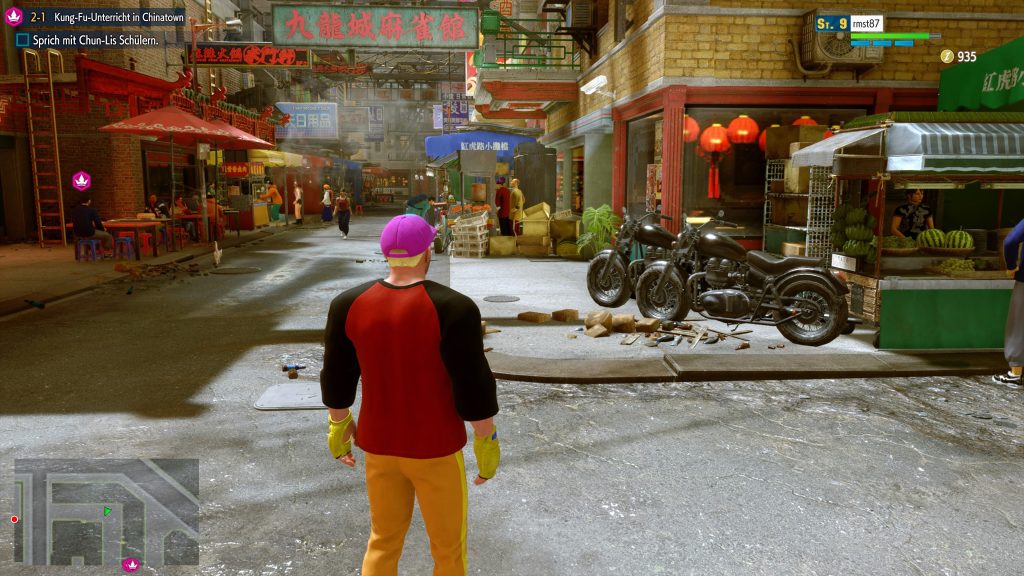
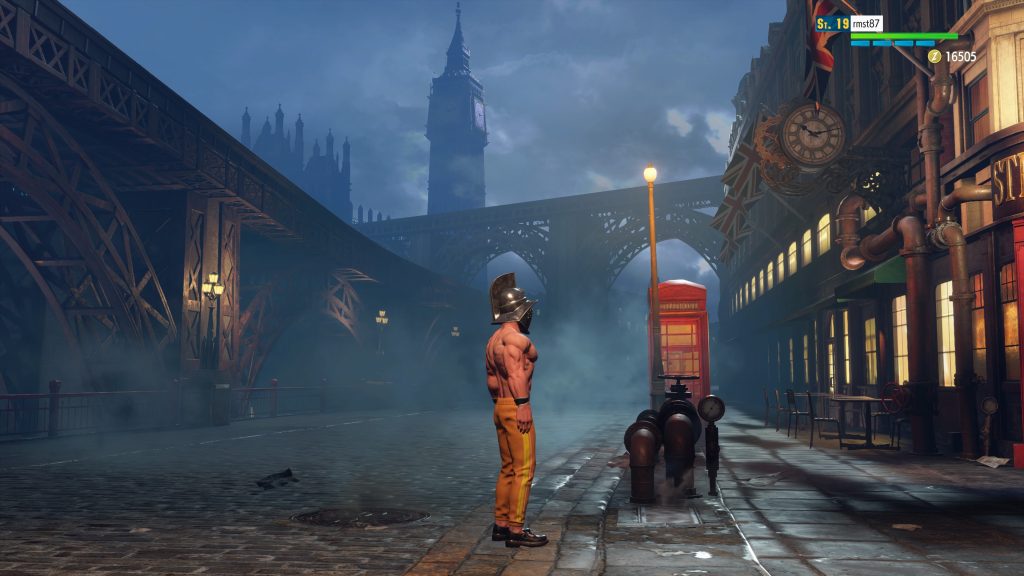
Further RPG elements are the clothes, shoes and accessories you can either get from certain NPCs but usually you buy them in shops or from merchants highlighted on the map. The shops offer different objects to select from, so it is worth checking each of them. Shirts, pants and shoes boost up your character values and there are interesting entries like a gladiator helmet or an animal costume as well. The game distinguishes the clothes equipped for your stats from the pure look of the character preventing your character from looking like a clown by combining all kinds of different clothes. Right from the beginning I found this a real plus as most of the clothes did not suit my taste at all. Further important objects are energy drinks, meals and all kinds of snacks. Those recover health or add certain temporary and persistent buffs. They can be used inside and outside of fights. However, during fights using them can be tricky as you must pause shortly to select them from the menu, usually resulting in catching a hit once returning to the action.
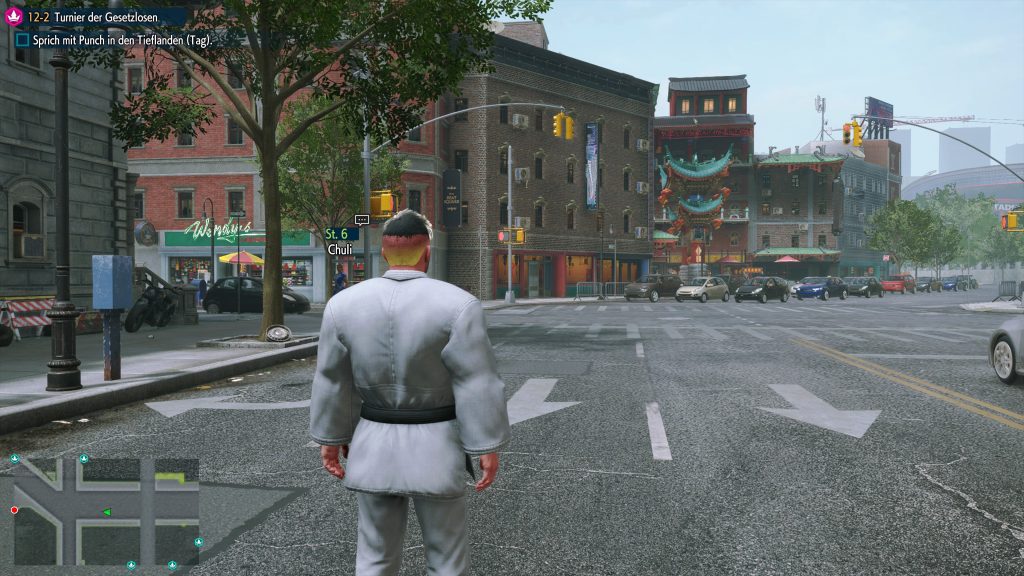
The World Tour mode does a good job of introducing all these features and serves also as kind of tutorial in the first chapters. The story around gangs in the open world Metro city is not interesting and neither fully logic. In later chapter another area in the fictional central Asian city of Nashall can be explored in addition to Metro City (where New York served clearly as the blueprint). All other countries around the World Tour are just short intermezzos like a visit to a Jamaican beach, the streets of London or the Colosseum in Rome. They usually just serve as set pieces to introduce new masters, so at least two or three more regions to really explore would have been nice. World Tour could have functioned as good tutorial, as mentioned above, but the heavily fluctuating difficulty makes it frustrating sometimes, whereas most of the time fights against standard-enemies are much too easy. Especially in later chapters heavy use of health recovery items and booster-snacks are mandatory to have a chance. For street fighter veterans those challenges might be welcome. For me however World Tour mode suffers from being stuck in between a tutorial-like casual single player experience and an overly hard fight campaign for more experienced players.

Fighting Ground is the second main mode of the game. It contains the training center, allowing you to learn the game initially and improve on learning combos. This is important as here you can improve the different punches, hits, kicks and blocks. You learn how to fill and use the drive-meter allowing you to perform drive attacks and drive blocks and how to throw your enemy as well. Street Fighter 6’s gameplay is complex and needs time to learn. This is especially true as timing windows of button presses are very narrow to perform the right action or combo. After some training I personally switched from classic street fighter to modern control. In this mode timing is still crucial but special attacks can be performed by pressing one button (in addition to R2) only. The controls are precise in both modes allowing you to learn and improve. Still for full control I preferred to use the D-pad instead of the control stick of my PS5 controller as it gave me the impression of having better control on character movement.
Fighting Ground also offers a small story mode letting you explore a small background story for each of the characters in a small series of fights. In between the fights animated comic cutscenes tell you more about the respective character. The small stories are interesting and really allow you to find your favorite fighter not only in terms of move-set but character as well. As with all fights in Fighting Ground mode the difficulty can be adjusted, an option that would have been good for the World Tour mode as well. After selecting your favorite character and performing enough training you can use Fighting Ground to perform classic fights against AI opponents or in 1-vs-1 online matches. There is a ranking system for online matches, but the game allows you to create own lobbies as well. Overall, Fighting Ground collects all the classic fighting game content for training and matches and has a large variety of options to adjust difficulty level, controls and fight durations for both single player and online matches. Fighting Ground alone already has enough content to entertain for a lot of hours.
Battle Hub is the central multiplayer mode in Street Fighter 6. The Battle Hub is designed like a sports arena with different zones for different fighting modes. All players joining with their avatars the same lobby enter this arena and you can interact with them via chat or simply walk around the hub to explore. In the center of the Battle Hub you can engage in avatar fights. In those fights you are playing with the character you designed for the World Tour mode. There is no limitation regarding the matches, you can request fights against all players joining the area, regardless of their current experience level. As this sounds unfair at first glance, I had good fun to see if I can beat someone on level 60 with my character not even leveled up to 40 yet. Around the central avatar fighting area is the zone for standard online fights with the predefined Street Fighter characters. Same as in avatar fights the winner is determined in fights of a maximum of three rounds. The extreme-fight area allows you to fight in an even more action-loaded stages. Depending on the stage, special events like electro-shockers, running bulls or small bombs will occur occasionally so you must be attentive not only to your opponent’s movement but on these things as well. I barely had the chance to play this mode online as very few people in the hub played this mode. Therefore, it seems not to be popular compared to avatar and standard fights where match making was always easy. There are also tournaments organized in the Battle Hub but until the time I wrote this review no tournament was active yet.
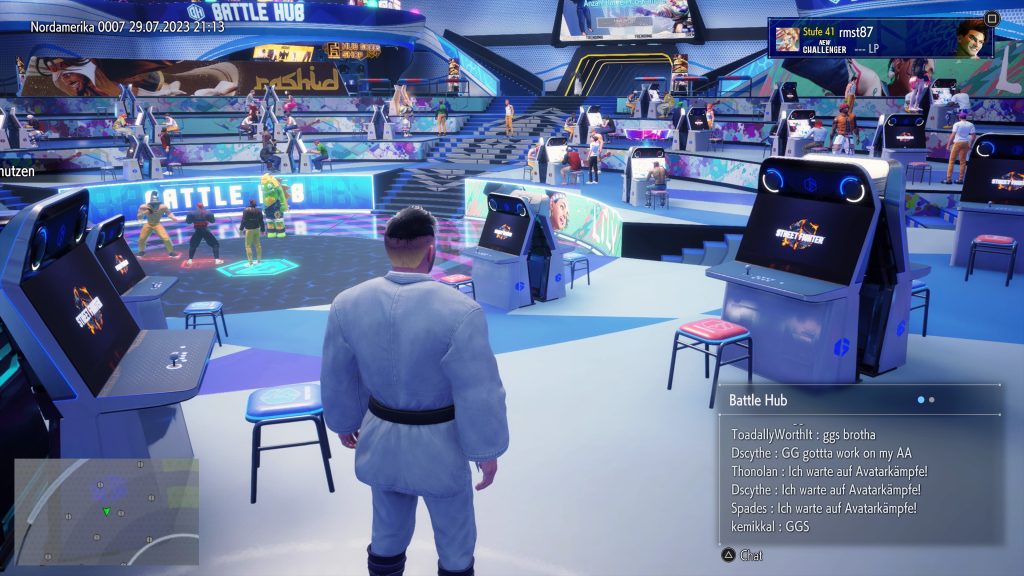
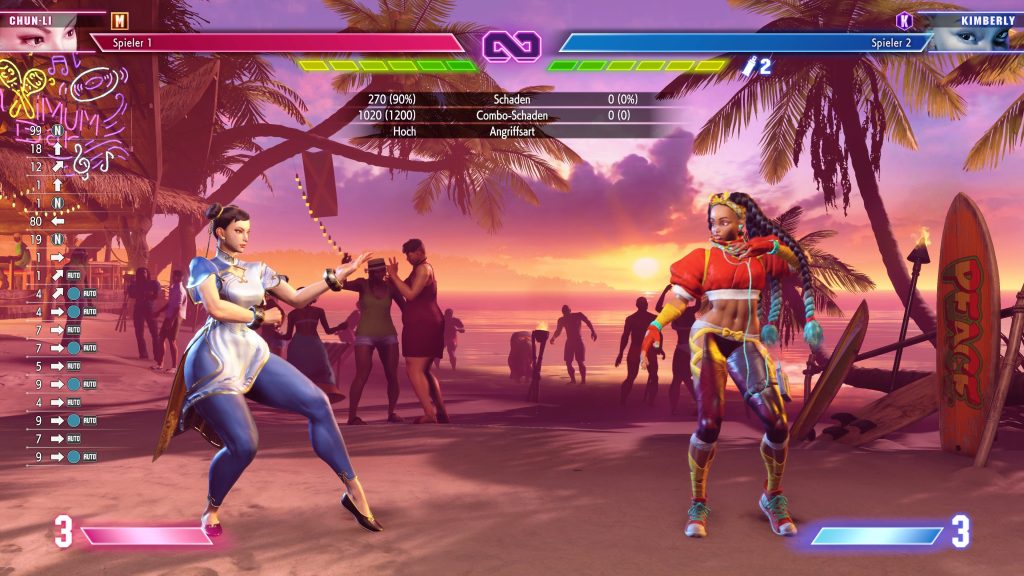
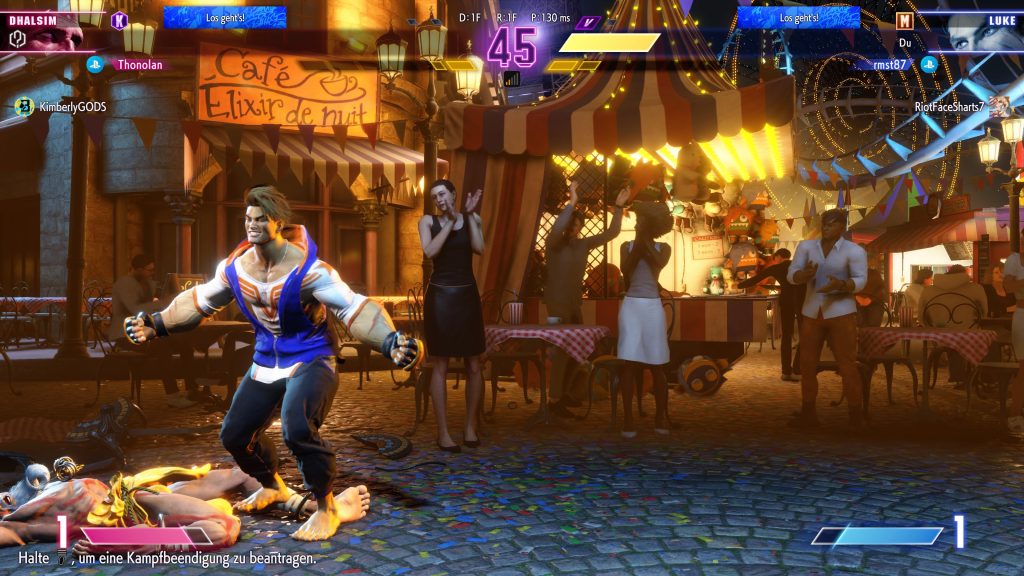
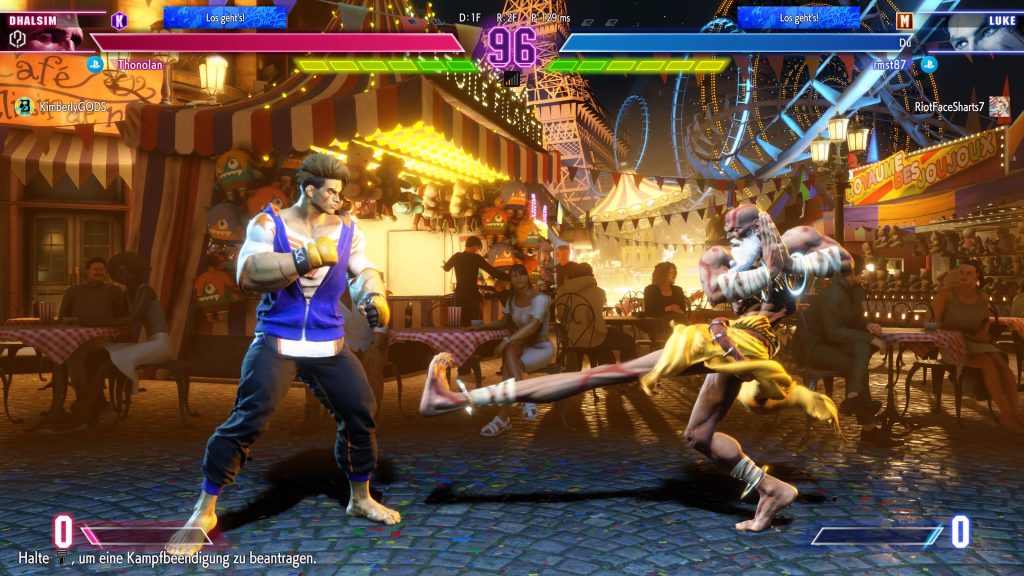
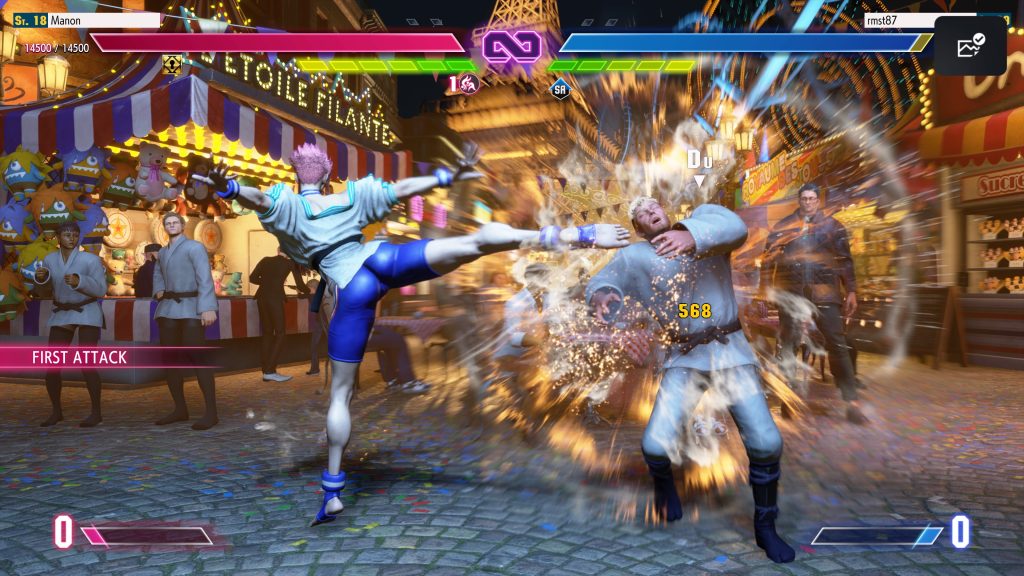
Battle Hub is the heart of the multiplayer of Street Fighter 6 and serves casual gamers for some quick fights as well as Street Fighter enthusiasts. In addition, small things like the presenter, a DJ-set, a big screen allowing just to sit and watch some of the matches and the option to just view fights of other players make it fun to explore the Battle Hub in more detail upon first entry. The first one to two hours I majorly wandered around watching other fighters and exploring the different zones.
Street Fighter 6 uses the RE-engine and looks extremely good. Fighter design and animation is gorgeous, cutscenes are a real eye-catcher and the stages with their different styles are really showing what current-gen consoles can show off. Textures of some objects and especially the buildings in the open world areas of the World Tour mode lag behind the quality of character and stages. The soundtracks are well-selected reaching from hip hop, pop to more electro sound. Character voices are also good and well matching the typical cliché characters in terms of voice tone and language accent.
In Street Fighter 6 everybody will find his favorite characters, game-modes, fighting styles and controls among the tons of possibilities. Surely the World Tour mode has some flaws in terms of balancing and precise controls will require a lot of practice. Still, there are enough options for casual game sessions as well.