
After 2023 had already started with the excellent remakes of Dead Space and Metroid Prime, Resident Evil 4 continues the trend, bringing a modern classic to current gen consoles.
As with Dead Space and Metroid Prime, I did not play the original released in 2005. However, I am a fan of the modern entries of the series, and I played Resident Evil 7, 8 and the remake of Resident Evil 2.
The story starts in a small Spanish village. You are again in the role of Leon Kennedy, this time on a mission to find Ashley, daughter of the US president. Soon you figure out that people of the village are infected by some kind of disease (“Las Plagas”) turning them into zombies. Throughout the sixteen chapters of the game you will fight and explore the village, a castle and a military base in the search for Ashley and the root of Las Plagas. You meet characters that made their appearance in previous entries already, like the mysterious Ada Wong for example. However, you will also encounter new enemies and fiends. One of those is Luis, a former scientist who will accompany you in some of the chapters, as does Ashley. All characters are very well animated, and an excellent voice cast makes them credible friends and foes. Being accompanied by either Ashley or Luis was one of the major differences compared to previous entries in the series. Even though Ashley is mostly passive and not a big help in facing the zombies it felt different compared to facing the horror alone.
However, this is only one aspect that makes Resident Evil 4 more of an action game compared to previous entries which focused more on horror and thrill. Most important the setting in the Spanish village is far less horrific compared to the claustrophobic floors of the house in Resident Evil 7 for example. In addition, the gameplay is fast paced: You can run and shoot at same time and after critical hits enemies get stunned allowing you to finish them off with a melee attack, like a roundhouse kick. There are also situations where you will face a horde of zombies at once. Those encounters felt almost like battle arenas in other games and even more emphasized the action focus. In its core however Resident Evil 4 keeps the known mechanics and cautiously proceeding usually is more successful than jumping straight into a horde of zombies. Ammunition for your weapons is rare and need to be spent with care. Resources can be found to craft additional ammunition and healing items. New weapons and weapon upgrades can be bought from the merchant. He also allows you to trade found artifacts for more money. As usual in the series these artifacts are mostly antiquities, and you can increase their selling value by placing gemstones into them which are dropped by stronger enemies.
On normal difficulty I felt the amount of pesos (the currency used) gained by selling those artifacts was too high, as almost always it allowed me to buy a new rocket launcher when available, allowing you to defeat even boss enemies with a single hit (which I just found out by accident). Those boss battles are excellent in terms of the art design, battle design and gameplay and the best the horror genre has to offer. The standard enemies also come with enough variety and individual challenges. Some have a helmet or shield; some stronger enemies are equipped with a chainsaw or machine-gun. This variety forces the use of different weapons and in addition some normal villager zombies will mutate when hit into zombies with ugly tentacles that attack you. One of these mutation types is prone to light and can be best attacked using flash grenades. This however is just one example to show how well designed the variety of enemies and weapons is making each chapter an exciting challenge to play.
Personally, I would have preferred some calmer exploration between battles, however with its high action focus the game is still well paced allowing you to catch up with the story and characters. The game is mostly linear but some branching ways on the map allow for exploring, mostly being rewarded by finding additional crafting material or artifacts. Small side quests, like killing some rats in a certain area or defeating a special enemy, also reward those players revisiting certain areas a second time.

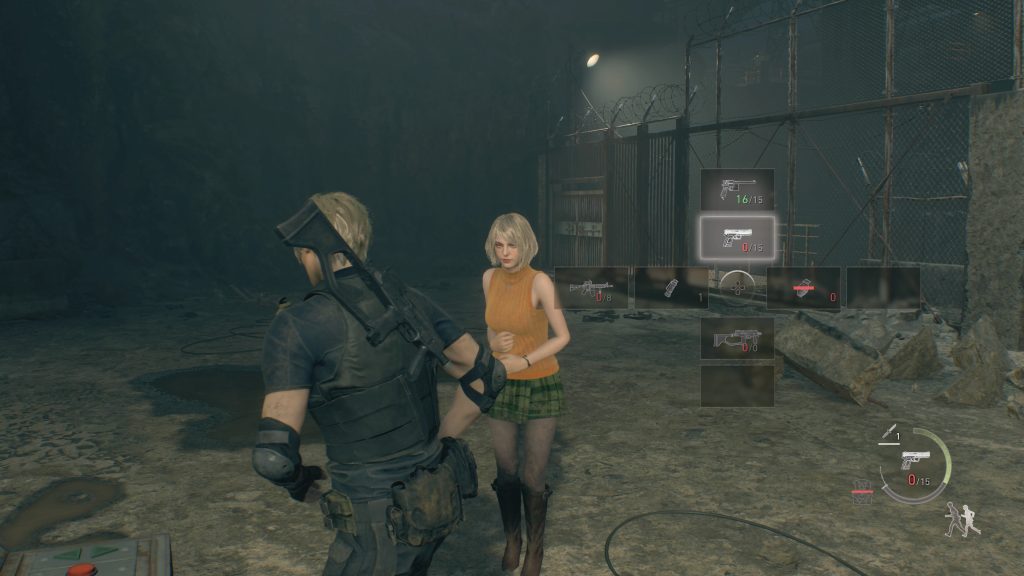
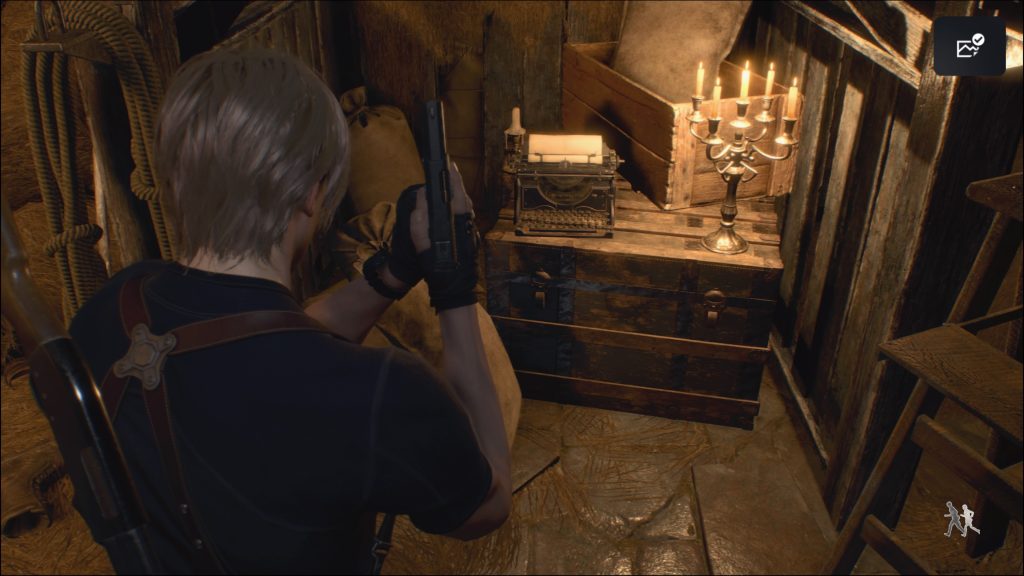
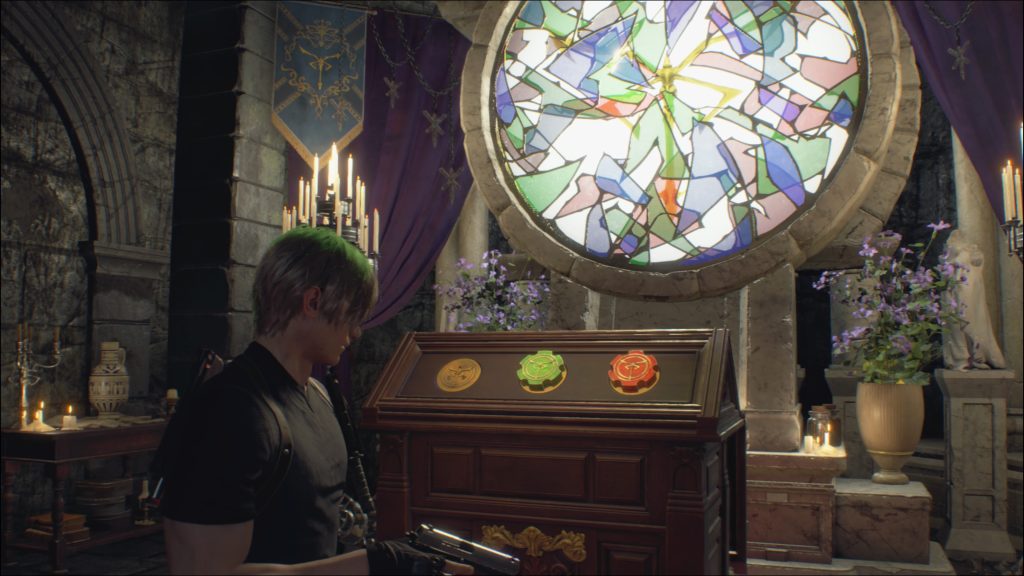
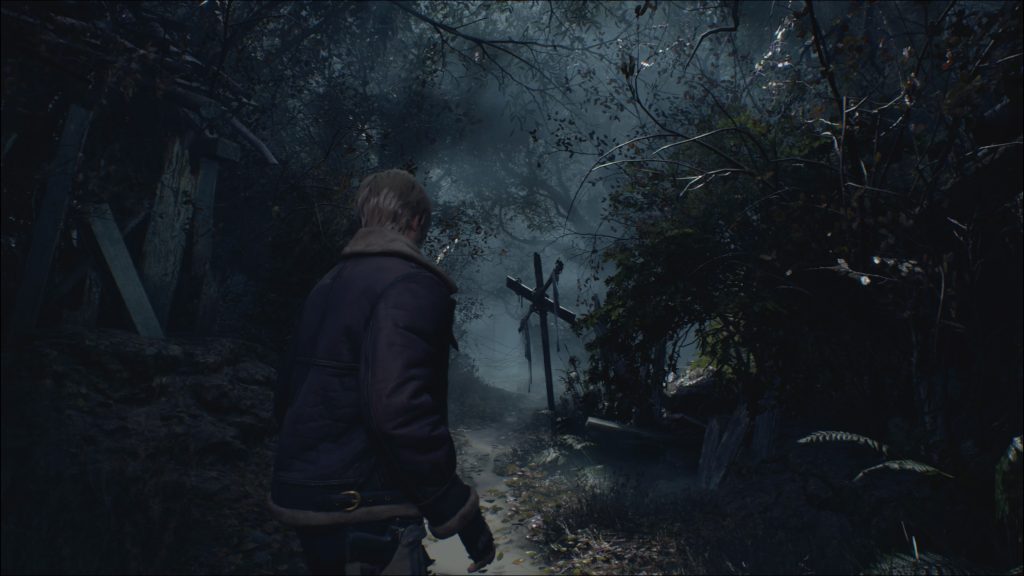
Technically the game is flawless. Controls are intuitive, both during the action and when navigating through the inventory. If you are not used to console third-person shooters an aiming aid can be activated. Apropos inventory: Also here the higher focus on action is visible. In normal difficulty mode I rarely needed to take care of limited inventory space and upgrades were not needed. Therefore, the inventory micromanagement of earlier entries does not play a too big role here.
In total I spent roughly 20 hours for my first playthrough, exploring the levels in detail and completing most side missions. The storyline itself is nothing special, but the characters are credible and the plot kept me motivated. Even more motivation brought the gameplay and balance to me. Resident Evil 4 is one of these games where fair and demanding combat, simple but useful resource management and well-paced exploration all click together. In the horror genre I still prefer the classic horror-house scenario of Resident Evil 7 as it brings more tension and horror-feeling than the setting in the Spanish village. Still, the gameplay and characters are the best in the Resident Evil series more than compensating for the lack of horror elements.